

Location: Camps of International Peacekeeping Force in 16 countries
Project Time: 2011
Treatment Capacity: Total 580 set of FMBR equipment, 0-500m3/d per set
Project Brief:
In 2010, 37 international enterprises bidded for the sewage equipment of peacekeeping forces in the United Nations headquarters in New York, and FMBR won the bid. At present, more than 500 sets of FMBR equipment has been applied worldwide. FMBR equipment has been listed in the United Nations long-term procurement catalogue.
The equipment adopts modular design, which can be combined with different modules according to the specific conditions of the project site, so as to effectively treat sewage and reduce equipment investment and operation cost. The equipment can remove COD, BOD, NH3-N, etc. it has the advantages of stable and reliable performance, high quality effect, automatic operation, remote monitoring, convenient O&M, saving footprint and pipe network, saving investment and maintenance cost. The effluent quality is better than the discharge and reuse standards of European and American countries.

Location: Nanchang City, China
Time: 2009
Treatment Capacity: 600 m3/d
WWTP Type: Integrated FMBR Equipment WWTPs
Process: Raw Wastewater→ Pretreatment→ FMBR→ Effluent
Project Brief:
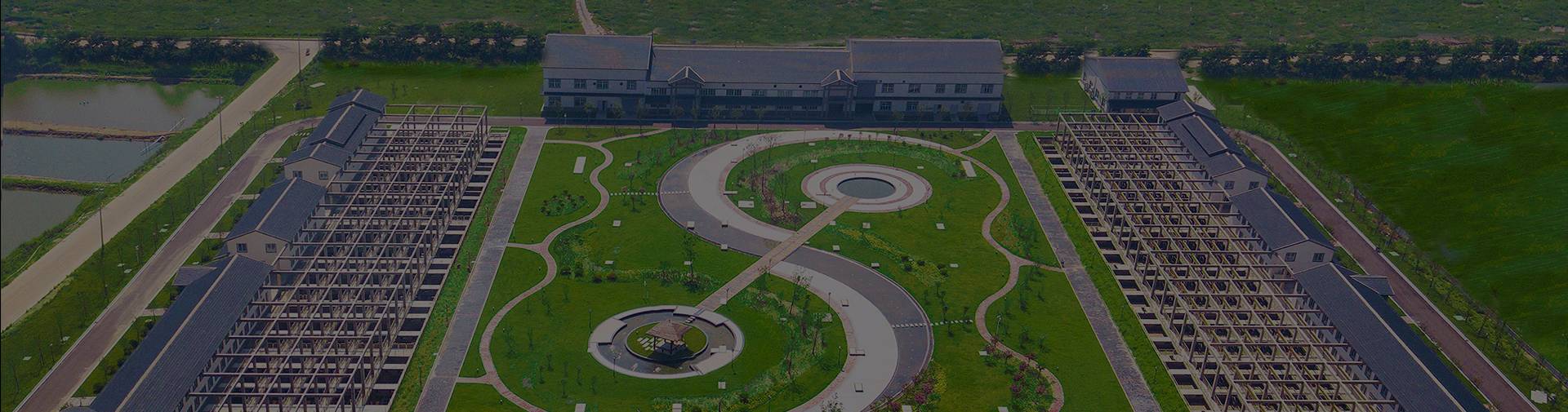
The hotel is located in the Nanchang City, with a daily wastewater flow of about 600m3. If adopts traditional wastewater treatment proposal to connect with municipal sewer network, the pipeline construction budget would be high and the pipe network construction would be difficult. Therefore, the hotel has decided to use the FMBR technology. The WWTP occupies a small footprint less than 600m2, so that WWTP can be built in a corner space near the lake in the hotel. The daily operation of the WWTP has no odor and noise, and has no impact on the hotel environment, and is integrated with the surrounding environment. Since completion, the project has been running stably for more than 10 years. The effluent meets the relevant standards of water reuse, and can be reused for hotel garden irrigation and supplement to lake nearby.

Location: Chongqing City, China
Time: 2019
Treatment Capacity: 10 WWTPs, the total treatment capacity is 4,000 m3/d
WWTP Type: Decentralized Integrated FMBR Equipment WWTPs
Process: Raw Wastewater→ Pretreatment→ FMBR→ Effluent
Project Brief:
In January 2019, Chongqing Jiulongpo scenic area adopted FMBR technology to treat the wastewater in the scenic area. The WWTP is integrated with surrounding environment of the scenic area. The treatment capacity is 4,000 m3/d. After treatment, the effluent is clear and replenished to the lake in the scenic areas.
Location: Town of Plymouth, USA
Time: 2019
Treatment Capacity: 19m3/d
WWTP Type: Integrated FMBR Equipment WWTP
Process: Wastewater→ Pretreatment→ FMBR→ Effluent
Project Brief
In March 2018, in order to discover the leading edge new technologies in the field of wastewater treatment and achieve the goal of reducing the energy consumption of wastewater treatment,

Massachusetts, as a global clean energy center, publicly solicited cutting-edge technologies for wastewater treatment globally, which was hosted by Massachusetts clean energy center (MASSCEC), and carried out innovative technology pilot in the public or authorized wastewater treatment area of Massachusetts. The MA State Environmental Protection Agency organized authoritative experts to conduct a one-year rigorous assessment of the energy consumption benchmarks, estimated consumption reduction targets, engineering plans, and standard requirements of the collected technical solutions. In March 2019, the Massachusetts government announced that Jiangxi JDL Environmental Protection Co., Ltd.’s “FMBR Technology” was selected and granted the highest funding ($ 150,000), and a pilot will be conducted at the Plymouth Airport Wastewater Treatment Plant in Massachusetts.
The effluent treated by FMBR equipment is generally stable since the operation of the project, and the average value of each index is better than the local discharge standard (BOD≤30mg/L, TN≤10mg/L).
The average removal rate of each index is as follows:
COD: 97%
Ammonia nitrogen: 98.7%
Total nitrogen: 93%